Last updated: November 19, 2026
Quick Answer: To avoid fees when using your emergency fund, start with free internal transfers, use a standard bank transfer before a wire, and use an in-network ATM only if you need cash now.
Key Takeaways
- The goal is not to get the money fastest at any cost; it is to avoid paying for speed you do not need.
- The first fee you are most likely to face is usually tied to the withdrawal method, not the emergency itself.
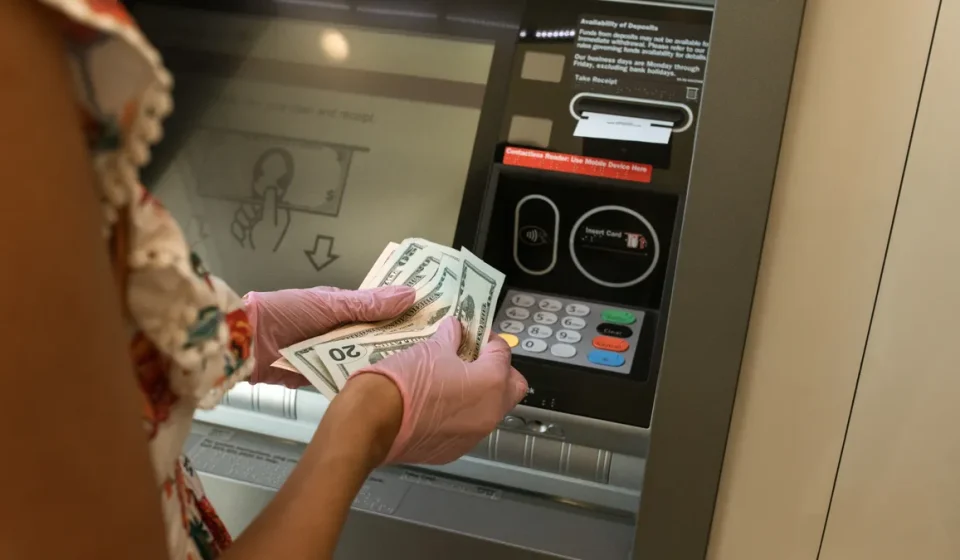
- You can avoid ATM fees by using your bank’s ATM, an in-network ATM, or a withdrawal method that skips cash.
- A bank transfer is often cheaper than a wire transfer when ordinary processing time is enough.
If you need to use your emergency fund, the cheapest path is often the one that keeps money moving inside your own bank first, then out to cash only if needed. To avoid fees when using your emergency fund, avoid ATM fees, wire transfer fees, cash advance fees, and overdraft fees by choosing the withdrawal method that matches the urgency instead of the first one that comes to mind.
The emergency fund withdrawal process that avoids surprise charges
The emergency fund withdrawal process is simple: move money in the least expensive way your bank allows, confirm the balance before you spend, and avoid any method that turns a free transfer into a fee-heavy transaction. To avoid fees when using your emergency fund, the goal is not to get the money fastest at any cost; it is to get the money without paying for speed you do not need.
Start by looking at the account that holds the emergency fund. If it is already in a checking account at the same bank, an internal transfer is usually the cleanest move. If it sits at a different bank, use a bank transfer first and only use a wire transfer when timing truly matters. If you need cash, get it from your own bank’s ATM or from an ATM network that your bank reimburses, not from a random machine that adds a surcharge.
A workable order looks like this:
-
Check the balance and available funds in the emergency account.
The result should be a clear number you can use without overdrawing the account or triggering a minimum balance fee. -
Choose the transfer method your timeline allows.
A standard bank transfer is often cheaper than a wire transfer, which is usually used for urgent, same-day movement. -
If you need cash, use an in-network ATM or your own bank’s ATM.
The result should be cash in hand without paying the ATM operator’s fee on top of any fee your bank may charge. -
If you must spend with a card, keep the withdrawal from becoming a cash advance.
A cash advance on a credit card is a different transaction from using your own cash balance, and it often brings fees and immediate interest. -
Check the remaining balance after the withdrawal.
That helps prevent a low-balance situation from creating a second problem, such as an overdraft fee or account penalty.
The cheapest method depends on where the money is sitting, but the principle does not change: use the account’s normal payment rails before you pay for speed. Consult your bank or a qualified financial professional if you are unsure which option is cheapest, and see the Consumer Financial Protection Bureau consumer finance pages and the FDIC’s deposit insurance resources for account basics and transfer types. Neither source changes the math of fees, but both help frame the choices.
Which fee is most likely to hit you first?
The fee most likely to hit you first is usually the one attached to the withdrawal method, not the emergency itself. ATM fees, bank transfer fees, wire fees, cash advance fees, and overdraft fees each show up in different places, so the mistake is assuming one “withdrawal” has one price.
ATM fees are the easiest to trip over. An out-of-network ATM can charge its own fee, and your bank may add another fee on top. That means one short cash withdrawal can become an expensive convenience purchase. If your emergency fund is already in a checking account, using your bank’s ATM or a network your bank recognizes is the safer choice.
Bank transfer fees are more situational. Many standard transfers between accounts you own are free, but some banks charge for certain expedited transfers or for sending money to another institution in a way that qualifies as a special service. If you have a day or two, a normal transfer is usually the cheaper lane.
Wire transfer fees are the classic pay-for-speed cost. A wire is often used when the money must move the same day or when the receiving institution requires it. That speed can justify the cost in a true deadline situation, but it is not the cheapest default. If the bill can wait until the next business day, a wire is usually overkill.
Cash advance fees are the easiest to misunderstand. Taking money from a credit card as cash is not the same as using an emergency fund. It usually comes with a fee and interest that can start right away, which makes it one of the costliest ways to cover an emergency. If your emergency fund is exhausted and you are thinking about a card cash advance, that is a signal to slow down and consider a cheaper transfer first.
Overdraft fees happen when the withdrawal or purchase pushes your checking account below zero and your bank covers the shortfall. A low-balance emergency is exactly when this can happen. Before moving money, check pending transactions and leave enough cushion for gas, groceries, or any automatic payment due in the next 24 to 72 hours.
How do I avoid ATM fees when withdrawing emergency money?

You avoid ATM fees by using an ATM your bank owns, an in-network ATM, or a withdrawal method that skips cash entirely. This is the most practical way to keep a small emergency from becoming a fee pileup.
The first move is to check your bank’s ATM network before you drive anywhere. Many banks list fee-free or reimbursable ATMs in their mobile app, website, or branch locator. If you have a choice, use the machine inside a branch during business hours rather than a standalone ATM in a convenience store or gas station. Standalone machines are where surcharge fees are most common.
If you already know you need cash, plan the amount carefully. One withdrawal of the exact amount you need is usually cheaper than two or three smaller withdrawals, because some ATM fees are charged per transaction. That matters when you are trying to keep costs down on a $60 or $100 emergency purchase.
A few habits help:
-
Use your debit card, not a credit card, at the ATM.
A debit withdrawal pulls from your own funds; a credit card cash advance can add fees and interest. -
Turn down “cash back” if the store or machine frames it like a convenience fee trap.
Cash back at checkout is sometimes free, but only if your debit card and merchant allow it. If the store adds a charge, skip it. -
Withdraw once, then stop.
Repeated ATM visits create repeated chances for fees and for mistakes in the amount you pull. -
Keep a small buffer in checking if your bank allows it.
A buffer of even one bill or a modest cushion can prevent an emergency withdrawal from triggering overdraft fees on automatic payments.
The trade-off is obvious: the more you optimize for convenience, the more likely you are to pay for it. If you need cash immediately and the only machine nearby is out of network, that fee may be worth paying once. It is a poor habit to repeat, not a moral failure in a one-time emergency.
When a bank transfer beats a wire transfer
A bank transfer beats a wire transfer when you can wait long enough for ordinary processing and want to avoid paying for speed you do not need. A wire transfer is a blunt tool: useful when timing is tight, expensive when timing is not.
Use a bank transfer when the money is moving between accounts you control and the urgency is measured in hours or days, not minutes. For example, moving money from a savings or brokerage cash account into checking for tomorrow’s rent is usually a better fit for a standard transfer than for a wire. The lower cost is the whole point. If your bank offers instant transfer options with a fee, compare that fee with the wire fee before you click anything.
Use a wire transfer when the recipient requires it, the deadline is same-day, or the payment failure would create a larger problem than the fee itself. For example, certain real estate closings, some escrow instructions, or a creditor that only accepts wires for urgent settlement may require one. In those cases, the fee may be the price of avoiding a much bigger consequence.
The biggest mistake is assuming “wire” means “better.” It usually means “faster and more expensive.” A wire transfer may also have cutoff times, often during normal banking hours, which means missing the window can delay the transfer anyway. If you discover the need after the cutoff, you may still end up waiting until the next business day and paying the fee for speed you did not get.
For a typical emergency fund withdrawal, the order of preference is usually:
- internal transfer between your own accounts,
- standard bank transfer,
- cash withdrawal from an in-network ATM,
- wire transfer only when the deadline justifies it,
- cash advance only as a last resort, and not as a normal plan.
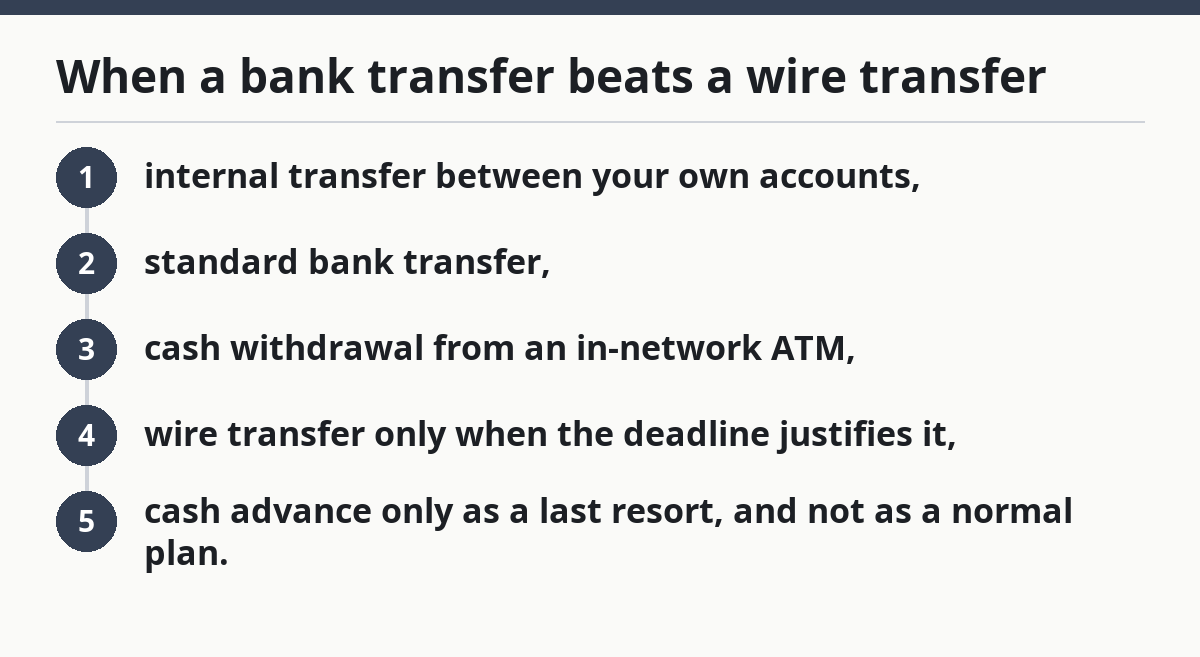
That sequence is not glamorous, but it is how you keep the cost of an emergency from becoming its own emergency.
How to keep a withdrawal from triggering overdraft or minimum balance fees
You keep a withdrawal from triggering overdraft or minimum balance fees by checking pending transactions and leaving enough money behind to stay above your bank’s threshold. That sounds basic, but it is the step people skip when they are rushed.
Before moving money out, review every debit card hold, scheduled bill, and recurring payment that has not posted yet. Gas station holds, restaurant tips, rideshare charges, and subscription renewals can all hit after the withdrawal. If your checking account is already thin, even a small emergency transfer can push you into negative territory once those items clear.
Minimum balance fees are bank-specific, but the idea is the same: some accounts require a certain average balance or monthly balance to avoid a charge. If your emergency fund sits in a checking or hybrid account with that rule, pulling too much out at once can create a fee that has nothing to do with the emergency itself. The fix is simple: know the threshold before you touch the money, and leave a cushion above it if you can.
Here is the cleanest way to avoid that chain reaction:
- Open the bank app and review available balance, not just current balance.
- Look for pending items and scheduled transfers.
- Estimate the emergency cost and add a small buffer for one day of spending.
- Move only what you need now, not the entire amount.
- Recheck the account after the transfer posts.
That buffer matters because a lot of bank fees are triggered by timing, not by the size of the emergency. If you empty the account to zero, a $12 subscription can create a $30-ish overdraft-style problem depending on the bank’s fee schedule. The exact amount varies, so the safer move is to avoid the condition that causes the fee in the first place.
This is also the point where the phrase “use your emergency fund” needs discipline. The fund is there to solve the emergency, not to become a full-account drain. Keeping a few days of ordinary transactions in checking can save you from paying to access your own money.
The emergency fund withdrawal process is cheaper when you decide the method before the crisis
The emergency fund withdrawal process is cheaper when you pick your default method before you are under pressure. To avoid fees when using your emergency fund, that choice saves money because it prevents you from paying for speed, convenience, or panic.
The practical rule is simple: use free internal movement first, standard bank transfer second, in-network ATM cash third, and wire transfer only when the deadline forces it. Avoid cash advance fees unless the situation is so urgent that the cost is justified and there is no cheaper option left. Keep an eye on overdraft and minimum balance rules every time you move money.
This is the part many generic articles skip: the fee problem is not only about the withdrawal itself. It is about the chain reaction around the withdrawal. A fast transfer can be worth it, but only if the fee is smaller than the harm it prevents. A cash withdrawal can be harmless, but only if you use the right ATM. A well-timed transfer can still cost money if it leaves your account below its required balance.
If the emergency is complicated enough that you are considering a wire transfer, a cash advance, or a move that could trigger overdraft, it may be worth a quick call to your bank’s support line before you act. That is not a sign of indecision; it is a cheap check before an expensive mistake.
For broader storage choices that affect how often you face these decisions, the hub page on where to keep an emergency fund is the right place to start.
What fees can happen when I use emergency savings?
The most common fees are ATM fees, transfer fees, wire fees, cash advance fees, and overdraft fees. Which one shows up depends on how the money leaves the account and whether the account balance stays above your bank’s minimum or above any pending charges.
How do I avoid ATM fees when withdrawing emergency money?
Use your bank’s own ATM or an in-network machine, and make one withdrawal instead of several small ones. If a nearby machine charges a surcharge and you only need a small amount, it may be cheaper to switch to a card payment or a bank transfer instead.
Is a wire transfer worth it in an emergency?
A wire transfer is worth it only when speed matters enough to justify the fee or when the recipient requires a wire. If the payment can wait until the next business day, a standard bank transfer is usually the cheaper choice.
Drafted with AI; not yet reviewed by a person.