Last updated: November 19, 2026
Quick Answer: Put at least 50% of a cash gift into a separate emergency savings account the same day you receive it, and save 100% if you do not need any of the money for a near-term expense. This guide on How to Use Cash Gifts to Start an Emergency Fund explains how to split the money, where to keep it, and when it is better to use the gift for an urgent bill instead.
Cash gifts can start an emergency fund the same day you receive them, and a practical move is simple: set aside most of the money in a separate savings account before it gets absorbed into meals, errands, and small purchases. Treat the gift as a one-time deposit, decide your split first, and move the emergency portion out of reach before you spend anything else. If you are unsure how to divide the money, consider the guidance of a financial professional.
If the gift is from family, a birthday envelope, holiday cash, or a check you were planning to deposit anyway, the decision is not “save it all or fail.” The real question is how much to reserve for emergencies, how much to use now without regret, and where to park the money so it still feels available when a flat tire or vet bill shows up. A plain savings account at an FDIC-insured bank or NCUA-insured credit union is usually the right landing spot. For a quick primer on building the fund itself, the hub page on Emergency Fund Funding Tactics can sit alongside this one.
The fastest way to turn cash gifts into emergency money
A fast way to turn a cash gift into emergency money is to move it into a separate savings account within 24 hours, then leave only the spending portion in your wallet. That one move does most of the work because money in a checking account or cash drawer tends to get nibbled away in 5-, 10-, and 20-dollar chunks.
Use this order:
- Count the total gift the moment you get it. If you received $100 in bills or a $250 check, write the number down before you do anything else. Seeing the full amount can reduce the vague feeling that “there’s plenty left” from taking over, and a financial professional can help if you are deciding how much to save.
- Decide your split before you spend on anything. Pick a percentage or dollar amount for emergencies, then set aside the rest for current needs or a planned treat. A simple split like 80/20 or 70/30 is easy to follow when the amount is modest and the gift was meant for you personally, but if you are unsure how to divide it, consult a professional.
- Deposit the emergency portion into a separate savings account. If the gift is cash, make the deposit the same day or the next business day. If it is a check, deposit it through a branch or mobile app as soon as it clears. The result you want is a balance that you can see in a different account, not cash sitting in a drawer.
- Keep any spending share in a different place from the emergency money. Put the “use now” amount in a wallet, prepaid card, or checking account, and spend only that. If you mix the two, the emergency fund becomes a vague idea instead of a protected amount.
- Label the deposit in your records. Write “birthday money,” “holiday cash,” or “gift from aunt” in a notebook or budget app. That makes later tracking easier if you use multiple gifts over a year.
This method works because the money has a job before it disappears. A common sign that the step worked is seeing the emergency balance increase in its own account while the rest of the gift stays mentally available for a planned purchase.
How much of a gift should go to savings?
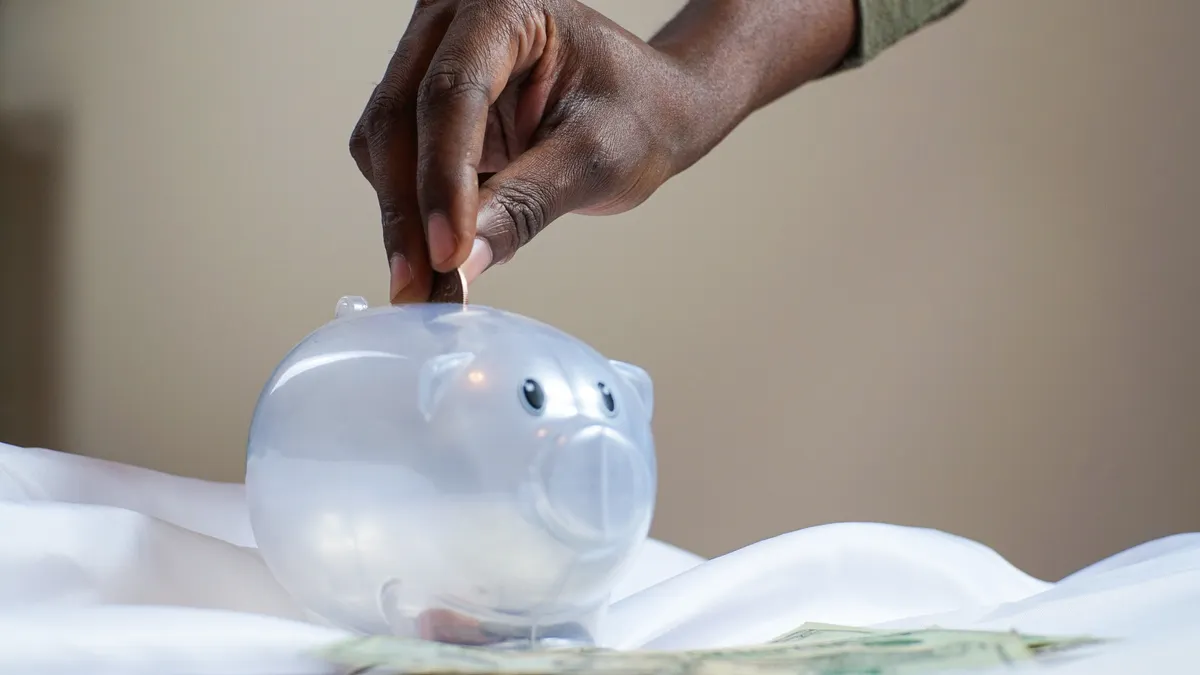
The right amount is usually the largest share you can set aside without creating resentment about the gift itself. For many people, that means saving 50% to 100% of a one-time cash gift, but a better general rule is to match the split to the gift’s size, the reason you received it, and the bills already waiting.
A $25 birthday envelope is not the same as a $500 holiday gift from grandparents. On a small gift, it often makes sense to save all of it and let your regular spending money handle the week’s extras. On a larger gift, a split is more realistic: keep enough for something visible, then move the rest to the emergency account. If you receive a $300 gift and keep $50 for a dinner out or a needed item, the other $250 can become the first real seed of the fund.
A useful test is this: if you spent the entire gift within 48 hours, would you regret not putting any of it toward a buffer for car repairs, co-pays, or a job gap? If the answer is yes, the emergency share should be the default, not the leftover.
The trade-off is emotional, not mathematical. Saving more means you build the fund faster, but it can feel like ignoring the giver’s intention if the gift was clearly meant for enjoyment. Spending more means you enjoy the moment, but you delay the safety cushion that keeps a small crisis from becoming a debt problem. A balanced split avoids both extremes.
This is one place where “all or nothing” thinking causes trouble. Saving only after you “see what’s left” usually means there is nothing left. A better rule is to choose the emergency amount first, then spend from the remainder only if it still fits your budget.
What counts as the emergency fund versus spending money?
The emergency fund should hold only money for real surprises, not planned purchases you have been wanting for months. That distinction matters because cash gifts can blur the line between “free money” and “extra money,” and a blurred line is how a tire replacement turns into concert tickets.
A real emergency is a sudden, necessary cost that you did not schedule into the month: a car repair, urgent home fix, a medical co-pay, or an unexpected travel cost for a family need. A planned expense is different, even if it feels urgent right now. Holiday clothes, a phone upgrade, a dinner out, and a new game console are not emergencies. If you use gift money for those, the gift is gone before it can do any protective work.
The cleanest rule is to divide the gift into two buckets:
- Emergency bucket: money that goes into a separate savings account and is not touched for ordinary wants.
- Spending bucket: money you can use now without guilt, because you already decided to allow it.
If the gift came in cash and you do not have a separate account yet, the next best move is to keep the emergency share physically separate for no more than a day or two, then deposit it. Cash at home is easy to spend. A bank account with a different balance is harder to ignore.
One honest limitation: if you are facing a bill due in 3 days, a cash gift may need to cover that bill instead of starting the fund. In that case, paying the bill is still a sound move because it prevents a late fee, shutoff, or overdraft. The emergency fund can start after the immediate fire is out.
What to do with holiday cash, birthday money, and family gifts

Use holiday cash, birthday money, and family gifts the same way you would use any other one-time gift: decide the split on the day it arrives, before the money gets folded into everyday spending. That consistency matters more than the source, because all three tend to disappear through tiny purchases if they sit unassigned.
Family gifts often come with an unstated expectation that you will “do something good” with them. For some readers, that pressure makes it hard to save even part of the money. The fix is to separate gratitude from allocation. You can appreciate the gift and still decide that 60%, 75%, or even 100% belongs in the emergency account. The giver is not in the room when the furnace breaks.
Holiday cash has one extra trap: it arrives during a season full of sales, parties, and small justifications. A $200 stack of bills can vanish on food, shipping, decorations, and impulse purchases before January starts. A simple defense is to deposit the emergency share before New Year’s Day and spend only the remainder.
Birthday money has another edge: it often feels like “fun money,” which makes it tempting to skip the emergency fund entirely. If your fund is empty or tiny, birthday money is one of the easiest low-friction places to begin. Saving even a single $50 bill can create the habit of one-time deposits.
If the gift is from a parent or relative and there is any chance they meant it for a specific purpose, ask a direct question before moving it. “Would you mind if I put this toward my emergency fund?” is clear and respectful. That one sentence prevents guessing.
The mistake to avoid is treating cash gifts as bonus spending money by default. That choice feels harmless for one week and expensive later, when a $180 repair has to go on a card because the cash is gone.
Put the money in the right account so you do not spend it
Put the money in a separate savings account, not in your checking account, if you want the emergency fund to survive the month. The account does not need to be fancy; it needs to be separate enough that the balance is easy to spot and hard to raid for lunch money.
A plain savings account is usually enough for a starter emergency fund. If you already bank at an FDIC-insured bank or NCUA-insured credit union, that is a sensible place to begin. You are not chasing return here. You are protecting a small pile of cash from impulse spending and from being mixed with rent, groceries, and bills. For deposit safety and account basics, the Federal Deposit Insurance Corporation and the National Credit Union Administration both explain how deposit insurance works on their official sites.
Three practical setup choices help:
- Name the account mentally as “emergency only.” The label matters because it changes how you think before you transfer money out.
- Keep the account off your everyday debit card if possible. If your bank gives you a debit card tied to savings, lock it away or avoid using it for routine purchases.
- Turn on balance alerts for every deposit and withdrawal. A text or app alert gives you a quick signal that the fund changed.
If you do not have an account yet, opening one should be the first task after you decide the split. Many banks and credit unions offer online applications that take about 15 minutes, though the exact process varies. What matters is that the account exists before the cash gets spent.
The downside of a separate account is that it is one more login and one more place to monitor. That small inconvenience is the point. A fund that is too easy to spend is not much of a fund.
How to handle gift cards, checks, and mixed gifts
Treat gift cards, checks, and mixed gifts as separate tools, because only one of them becomes emergency cash right away. Cash gifts are the simplest; the others need an extra step before they can help.
A check can usually be deposited into your savings account or checking account, then transferred to the emergency fund. If your bank allows mobile deposit, that can save a branch trip. A gift card is different: it is not emergency money unless you can convert it into a needed purchase you would have made anyway. If the card buys groceries, medicine, or household supplies you already planned to purchase, that frees up cash you can move into savings. If it only buys nonessential items, it does not belong in the emergency bucket.
Mixed gifts can work well if you assign each piece a job. For example, a $150 cash gift plus a $50 restaurant card does not mean you have $200 to save. It means you can put the $150 into the emergency account and use the restaurant card for a dinner that would have come out of your regular spending money. That arrangement keeps your cash reserve intact.
The biggest mistake is converting every gift into “spendable money” because it arrived together. A card, a check, and a stack of bills should not all be treated the same. A check can fund the emergency account directly. A cash gift can be split. A gift card may reduce one cost but does not replace cash in the bank.
If a check is large enough that you are tempted to spend from it before it clears, slow down. Wait for the deposit to process fully, then move the emergency share to its own account. That pause is boring, and boring is useful here.
Common mistakes that drain cash gifts before they help
Save first or the money will disappear into small, forgettable purchases. That is the main failure mode with cash gifts, and it happens fast because no single purchase looks expensive on its own.
The most common mistakes are these:
- Leaving the gift in a wallet or kitchen drawer. Cost: the money gets blended into daily spending. Better move: deposit it or assign it the same day.
- Using the gift to cover wants first and “saving what’s left.” Cost: there is often nothing left. Better move: choose the emergency share before you shop.
- Putting the money into checking and calling it saved. Cost: it looks available, which makes it vulnerable. Better move: keep it in a separate savings account.
- Treating every gift as if it must be spent on yourself immediately. Cost: the buffer never grows. Better move: allow a small spending share only after the emergency portion is set.
- Waiting for a bigger windfall before starting. Cost: you lose months or years of protection. Better move: begin with the current gift, even if it is just $20 or $40.
A useful rule is to start with whatever arrives now, not with the amount you wish you had. A $30 bill in a separate savings account is a real beginning. It may not cover a full emergency, but it breaks the habit of spending every gift as soon as it lands.
The position I would take is this: if you need a starter fund and you receive a cash gift, saving at least part of it is the default. The exception is when the money is already needed for a genuine near-term obligation. That is who this advice is not for: anyone using the gift to prevent a late fee, eviction risk, shutoff, or other immediate loss. In that case, stability comes first, then the emergency fund.
Key Takeaways
- Decide the split the same day the gift arrives so the money has a job before it gets spent.
- Put the emergency share in a separate savings account, not in your wallet or checking balance.
- Use a planned spending share only after the emergency portion is protected.
- Holiday cash, birthday money, and family gifts all work the same way: assign them fast.
- If a bill is already due, covering the bill may beat starting the fund today.
Should you count cash gifts as income?
Usually, no. Cash gifts are typically treated as a one-time transfer, not regular pay, but the tax and reporting details can vary by situation. For day-to-day budgeting, keep the money in the gift bucket unless a tax professional tells you otherwise.
Drafted with AI; not yet reviewed by a person.