Last updated: November 20, 2026
Key Takeaways
- Start with your own expenses, then add any shared costs you might have to cover alone.
- Count one month of your rent share, plus extra only if your lease makes you the fallback payer.
- Add shared bills only when they can affect your cash flow directly.
- Leave out roommates’ personal costs, your savings goals, and nonessential apartment items.
Living with roommates changes your emergency fund goal because some costs are shared, but your job losses, car repairs, and medical bills are still yours. If you are figuring out How to Set an Emergency Fund Goal When You Share Expenses With Roommates, the core answer is to build around your personal expenses first, then add only the shared bills you would still owe if the apartment stayed on your name. The steps below show where to draw that line.
The emergency fund goal for roommates starts with your own bill list
Your emergency fund goal should start with your personal expenses, not the full apartment bill. Picture this: you split rent, utilities, and internet, but if a roommate moves out or skips a payment, your name may still be tied to the lease for the full month. That means your goal has to protect you, not the room.
The cleanest way to do this is to separate expenses into three buckets: what is only yours, what is shared, and what is temporary overlap. The overlap is the part most people miss. It can include one month of rent, a utility bill in your name, or a deposit you’d need to cover while you replace a roommate.
Use these buckets:
- Personal expenses: phone, transit, food, insurance, prescriptions, debt payments
- Shared bills: rent, electricity, water, internet, trash
- Household overlap: costs you may need to cover alone for a short stretch
If you want a broader framework for the rest of your money plan, the hub on emergency fund goal setting belongs next in your reading. This page stays focused on roommates so the math doesn’t blur into a couple’s budget or a whole-household plan.
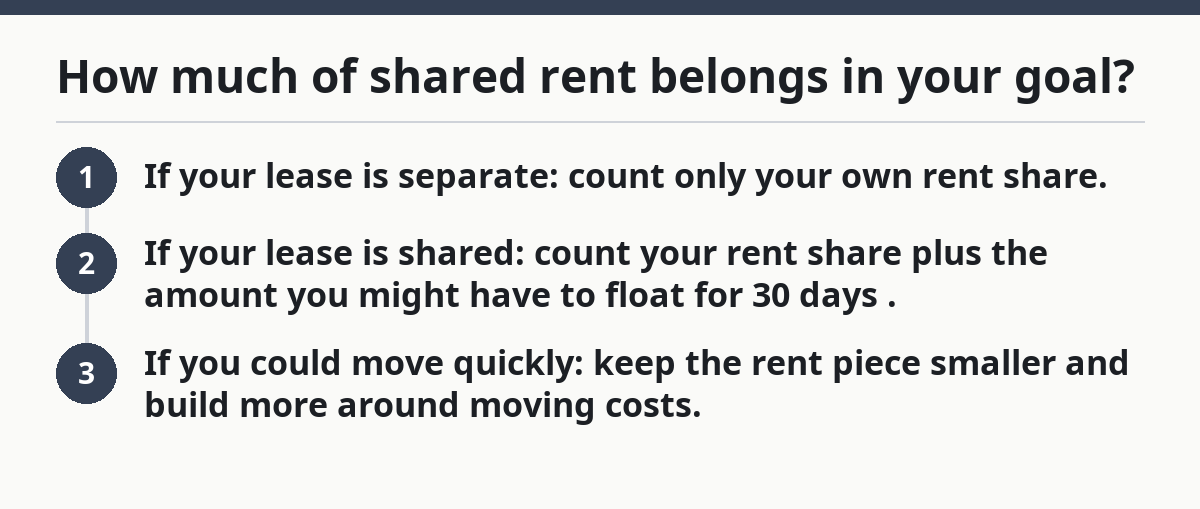
How much of shared rent belongs in your goal?
You should usually count your share of rent for 1 month and, in some setups, a little more if your lease makes you the fallback payer. Picture this: you normally send half the rent, but the landlord only cares whether the rent arrives on time. If your roommate disappears, your name does not get a discount.
Start with the exact amount you pay each month for rent. Then ask one question: if your roommate stops paying, would you still have to cover the full amount until you find a replacement or renegotiate? If yes, your emergency fund should reflect that short-term gap.
A practical rule:
- If your lease is separate: count only your own rent share.
- If your lease is shared: count your rent share plus the amount you might have to float for 30 days.
- If you could move quickly: keep the rent piece smaller and build more around moving costs.
A good test: can you keep the apartment for a month without panic if a roommate leaves? If the answer is no, your goal is too low.
How do shared bills change the number?
Shared bills should change your emergency fund goal only when they can hit your personal cash flow. Picture this: you and two roommates split utilities, but the electric account is in your name. If the others pay late, the bill is still due on the same date.
The truth is, not every shared bill deserves a place in your emergency fund. A bill that is split evenly and handled on time each month does not need to be fully counted again. A bill that sits in your name, has late fees, or gets paid after roommates reimburse you does deserve attention.
Use this simple filter:
- Count it fully if your name is on the account and you must pay first
- Count part of it if you may need to cover one billing cycle alone
- Skip it if it never touches your cash flow directly
If your utility share is $80 a month and you might have to float it for one cycle, that is an emergency-fund item. If it usually clears from a group app within a few days, it is usually not.
Step-by-step: set your roommate emergency fund goal
You set the goal by listing your own monthly essentials, adding only the shared costs you might have to front, then multiplying by the number of months you want to protect. Picture this: you sit down with your last 3 bank statements, your lease, and the utility bill, and the number stops feeling fuzzy.
-
Collect your lease, utility bills, and spending records from the last 60 to 90 days.
This gives you the real monthly numbers, not guesses. -
List your personal expenses and shared bills in separate columns.
That makes it obvious which costs stay yours if the roommate setup changes. -
Mark every shared bill that could fall on you for 30 days.
Those are the shared costs that belong in the emergency fund goal. -
Add your personal monthly essentials and the shared bills you might cover alone.
The result is your monthly protection number. -
Choose how many months of coverage you want for that number.
Many people start with 1 month in a roommate setup, then build toward more if job stability is shaky. -
Multiply the monthly protection number by your chosen months.
That is your emergency fund goal. -
Trim the goal if a separate safety net already covers part of the risk.
A trusted family backup or a severance payment that is real and available fast can change the target. -
Review the goal every 6 months or when rent, roommates, or income changes.
One move-in, move-out, or job change can shift the number fast.
What not to count when you share an apartment
You should not count your roommates’ personal costs, your savings goals, or the fun parts of the apartment in your emergency fund. Picture this: you pay for streaming, snacks, and a shared couch, but those are not the bills that keep you housed.
A lot of people make the same mistake: they add the whole apartment cost as if they own the place alone. That can push the goal too high and make it feel impossible. The opposite mistake is just as bad. They count only their half of rent and ignore the fact that a lease and utility account can create short-term overlap.
Skip these items unless they directly affect survival:
- Roommate groceries
- Shared furniture purchases
- Decor, plants, and kitchen gear
- One-time moving splurges
- Your roommate’s debt or personal expenses
Here’s the catch: shared living is not shared liability. If a bill is tied to your name, that bill matters. If it is just a convenience item, leave it out.
What if your roommates are unreliable?
You should build a larger cash cushion if your roommates pay late, change plans often, or leave gaps in the lease. Picture this: one roommate moves out with 2 weeks’ notice, and the other says they’ll “catch up next month.” The emergency fund has to cover real behavior, not the group chat promise.
This is where household overlap matters most. If you know you may have to front one full rent payment, one utility cycle, and a small moving or replacement cost, add those to your goal. If the roommates are steady and the lease is cleanly split, keep the overlap smaller.
Use this rule of thumb:
- Stable roommates, separate leases: keep the goal closer to your personal expenses
- Shared lease, uneven payment history: add at least one month of shared housing costs you might need to carry
- Frequent roommate turnover: build for a longer gap and treat that as part of your emergency fund goal
The best part? You do not need a perfect number on day one. A clear starting goal beats a blurry one that never gets funded.
How to keep the goal from getting too big or too small
You keep the goal right-sized by checking what would actually happen after a bad month, not after every possible disaster. Picture this: you lose a job, your roommate leaves, and a utility bill lands in your inbox on the same day. That is the scale you are planning for.
Too small looks like this: you can cover one personal bill but not rent if the apartment goes sideways. Too large looks like this: you set a full household fund for costs you do not control. Both errors cost you. The first leaves you exposed; the second slows your saving and makes the goal feel unreachable.
Use a simple check every time your setup changes:
- New roommate? Rework the shared bill list.
- New lease? Recheck the rent exposure.
- New job? Decide whether your months of coverage should change.
- New utility account in your name? Add it.
A plain spreadsheet works fine. So does a notes app with three columns and one monthly total. The tool matters less than the habit.
For a more general framework on setting your own target, the main emergency fund goal setting resource on this site can sit above this page in the journey. This article handles the roommate twist: where the shared costs end and your personal reserve begins.
What expenses should roommates count in an emergency fund?
Roommates should count any expense that could land on one person alone for a short time. That usually includes personal bills, rent if the lease is shared, and utility accounts in one person’s name. Shared snacks, furniture, and decor do not belong in the goal unless they affect housing or basic living costs.
Should shared bills reduce my personal emergency fund goal?
Shared bills can reduce your personal emergency fund goal only if they are truly split, stable, and not likely to fall back on you. If a bill is in your name or you might need to cover it for 30 days, keep it in the calculation. A roommate setup lowers some costs, but it does not erase your risk.
How do I plan emergency savings in a roommate setup?
Start with your own monthly essentials, then add the shared bills you might have to front alone. Multiply that total by the number of months you want to cover, then review it every 6 months or when roommates or rent change. In a roommate setup, the right goal protects your cash flow, not the whole apartment.
Drafted with AI; not yet reviewed by a person.